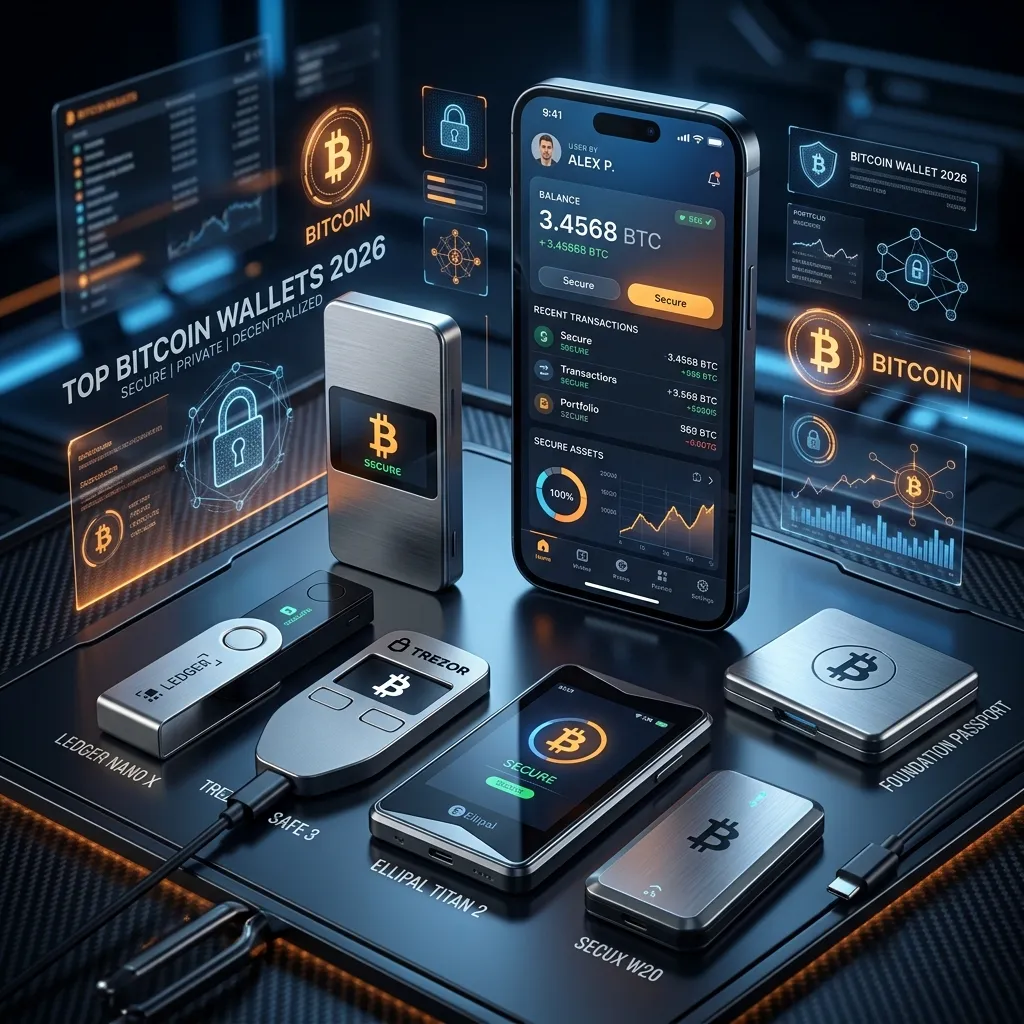
🎯 Introduction: The Responsibility of Sovereignty
Owning Bitcoin is fundamentally different from holding money in a traditional bank. In a bank, you are an unsecured creditor holding a promise of payment. In the world of Bitcoin, you hold the Asset itself—but only if you control the cryptographic keys.
In 2026, as Bitcoin’s value reaches unprecedented levels, the incentives for sophisticated hackers and physical bad actors have never been higher. This guide provides a battle-tested and technically rigorous blueprint for securing your digital wealth against both remote digital theft and local physical threats.
Section 1: Definition — What is Self-Custody?
The starting point of all security is the absolute control of the Private Key.
Definition
Cold Storage
Cold Storage is the cryptographic practice of keeping Bitcoin private keys in an environment that is 100% disconnected from the internet. By using specialized, air-gapped hardware that never communicates with “online” systems, you eliminate the risk of remote hacks, keyloggers, and malware. This is the only acceptable standard for storing significant wealth.
The cardinal rule remains: “Not your keys, not your coins.” If you rely on a third-party exchange to “store” your Bitcoin, you are vulnerable to their bankruptcy, censorship, and security failures.
Section 2: The Core Concept — The Sovereign Storage Hierarchy
Security is not binary; it is a spectrum of trade-offs between Safety and Convenience.
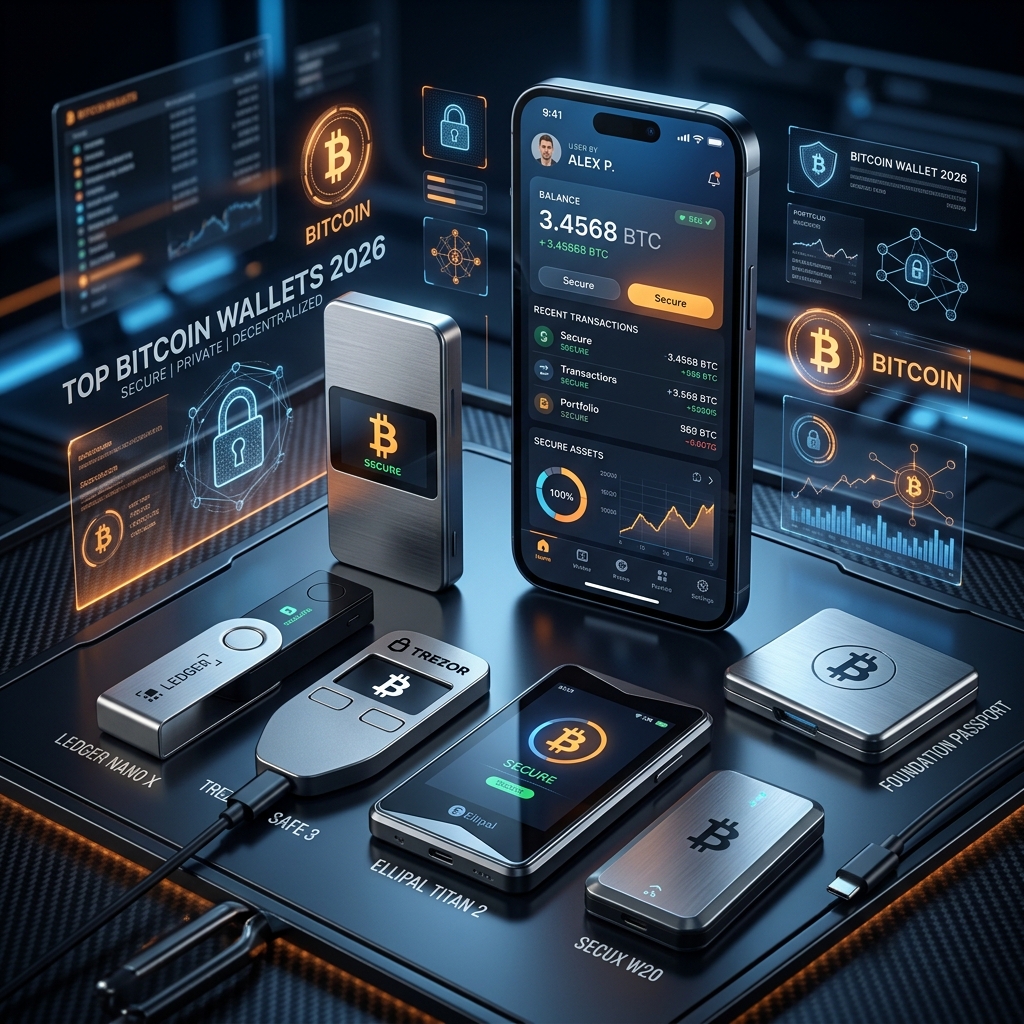
A robust strategy uses multiple layers:
- The Foundation: A high-quality hardware wallet containing a Secure Element (EAL5+).
- The Backup: A physical steel plate for the BIP-39 recovery seed.
- The Shield: A hidden passphrase (25th word) for plausible deniability.
Section 3: How It Works — The Air-Gapped Signature Protocol
To maintain “Cold” status, your private keys must never touch a device with an internet connection. Modern storage uses PSBTs (Partially Signed Bitcoin Transactions) to bridge the gap.
Mnemonic Generation
The hardware device creates a 24-word seed phrase (BIP-39) using a high-entropy random number generator inside the secure element.
The Transaction Request
You create a payment on your computer. Your wallet software generates a PSBT file (a 'skeleton' of the transaction).
Offline Signing
You move the PSBT to your device via an SD card or QR code. You physically review and sign it. The keys never leave the hardware.
Broadcast
The signed signature (not the key) is moved back to the computer and sent to the network. Your Bitcoin is moved while your keys stay 100% offline.
Section 4: Disaster Recovery (Steel vs. Everything Else)
If your home faces a fire, a flood, or a natural disaster, will your Bitcoin survive?
The choice of recovery medium determines whether your wealth survives a physical disaster. While digital backups like cloud storage or screenshots are highly vulnerable to remote hacks and should never be used, physical paper notebooks offer basic protection but are fragile and susceptible to decay. For professional-grade security, Grade 316 Stainless Steel plates are the current standard; they are fire-resistant up to 1400°C, immune to water damage, and effectively eternal, ensuring your seed phrase survives even the most extreme environmental conditions.
Section 5: The Ultimate Vault — Multi-Signature (Multisig)
For “Life-Changing” sums, you should eliminate the Single Point of Failure. A 2-of-3 Multisig setup is the gold standard for institutional-grade security.
- Key 1: In your home safe.
- Key 2: In a secure safety deposit box.
- Key 3: Held by a trusted security partner or in a separate geographic location. Even if a thief steals one of your hardware wallets, they cannot move your funds. Even if you lose one backup, your wealth is still 100% accessible.
Section 6: Related Concepts — The OpSec Cluster
Security is a holistic lifestyle, not a product:
- Best Hardware Wallets → Reviewing the market’s most secure silicon.
- Public & Private Keys → The foundational math of ownership.
- Understanding Confirmations → Knowing when your deposit is final.
- Is Bitcoin Anonymous? → Privacy is the first layer of security.
- What is a Bitcoin Node? → Verifying your vault status without trusting a 3rd party.
Section 7: FAQ — The Defense-in-Depth Audit
1. What is the safest way to store Bitcoin?
The only professional standard for long-term storage is Cold Storage. By using a dedicated hardware device that never connects to the internet, you remove the possibility of digital theft. We recommend the BitBox02 or Trezor Safe 3 for their open-source security.
2. Should I keep my Bitcoin on an exchange?
Only keep what you intend to trade in the next 24 hours. For everything else, remember the motto: “Not your keys, not your coins.” When you store on an exchange, you are just holding an IOU in someone else’s database.
3. What is a “Seed Phrase”?
Your seed phrase (12-24 words) is the human-readable version of your Master Private Key. If your hardware wallet is destroyed, lost, or stolen, these words are the only way to recover your funds. Treat them like the most valuable physical object you own.
4. Is a paper wallet safe?
No. Paper wallets were popular in 2013, but they are obsolete in 2026. They are difficult to spend from safely and can easily be destroyed by environmental factors. A Hardware Wallet combined with a Steel Backup for your seed phrase is the modern standard.
5. What happens if my hardware wallet is stolen?
The thief would still need your physical PIN to access the device. Most hardware wallets will self-destruct (wipe all data) after 3-10 incorrect PIN attempts. As long as you have your seed phrase, you can restore your funds on a new device.
Section 8: Summary — The Peace of Self-Sovereignty
Storing Bitcoin safely is a journey from trusting institutions to trusting yourself and universal mathematical constants. By using a hardware wallet, securing your keys on steel, and practicing the discrete workflow of offline signing, you achieve a level of financial security that was historically reserved only for central banks.
True wealth is not just what you own, but what you have the power to keep.