🎯 The Engine of the Network
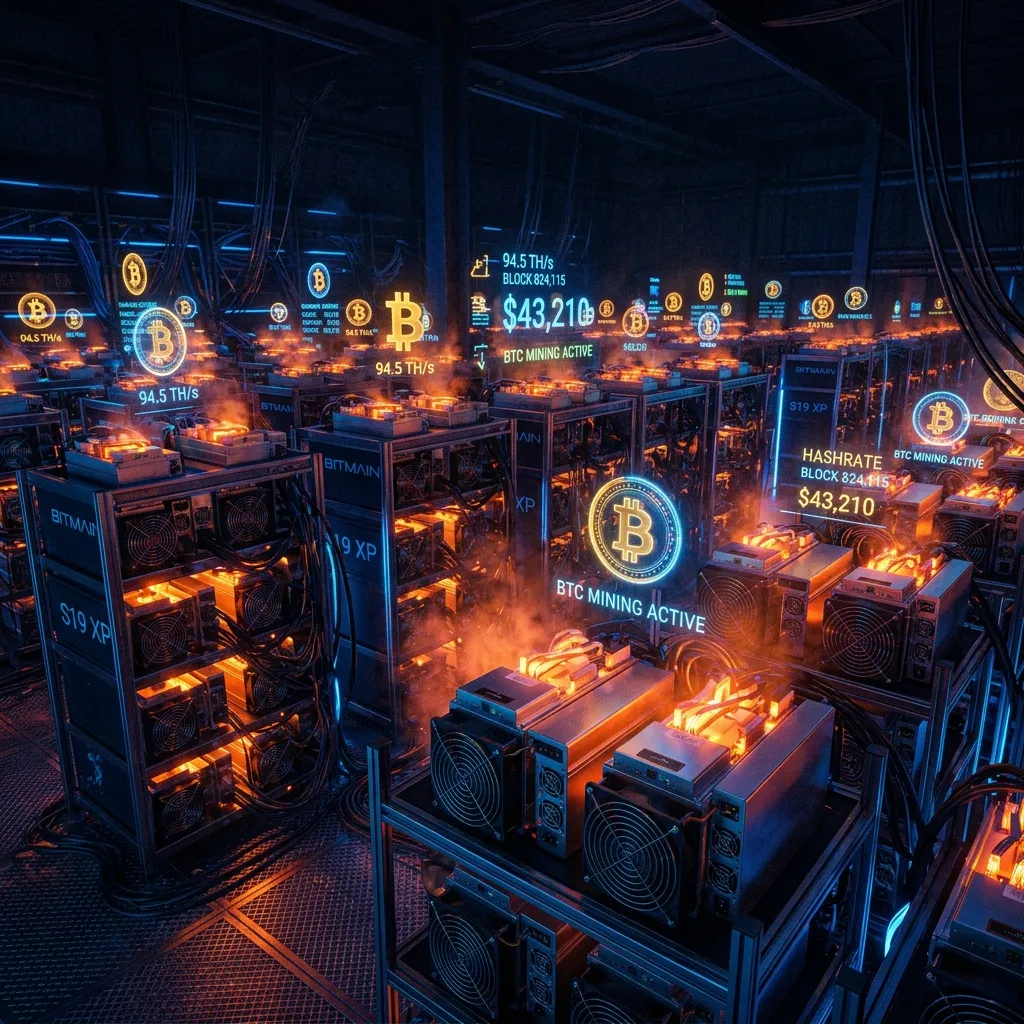
Have you ever wondered where new Bitcoins come from or what makes the Bitcoin network so secure? The answer is: Bitcoin Mining. Mining is the decentralized process that fulfills two main functions: the emission of new Bitcoins and the security of the network through transaction validation.
⚙️ 1. The Technical Process (Hashing)
Without mining, there would be no authority to verify transactions. Instead, the system relies on a distributed network of high-performance computers.
Mempool Collection
Miners collect unconfirmed transactions from the global network.
SHA-256 Hashing
Miners bundle data into a block and search for a valid hash value by changing the 'nonce'.
The Race
The first miner to find the solution broadcasts it to all other participants.
Confirmation
Nodes verify the solution. If correct, the block is appended to the blockchain.
🛡️ 2. Proof of Work & Security
Proof of Work (PoW) is the ultimate security mechanism. It ensures that it is extremely expensive to create a block but very easy to verify.
- Hashrate: The measurement of computing power. The higher it is, the more resistant Bitcoin is to attacks.
- Difficulty: A parameter that adjusts automatically every two weeks to maintain the 10-minute average block time.
💎 3. Economics: Rewards & Halving
Miners are rewarded for their work, creating the economic incentive to secure the network:
- Block Subsidy: New BTC created with every block. Currently (post-2024 halving), this is 3.125 BTC.
- Transaction Fees: Users pay fees to have their transactions prioritized.
- Halving: Every four years, the issuance rate is halved, making Bitcoin a deflationary asset.
🌍 4. Energy & The Environment in 2026
Bitcoin mining consumes significant electricity—and that is a feature, not a bug. The energy expended is directly proportional to the network’s security.
- Renewable Energy: In 2026, miners increasingly utilize excess wind, hydro, or solar energy.
- Grid Stabilization: Mining farms act as flexible loads that can balance power grids.
- Methane Flaring: Innovative miners capture methane waste from oil fields to reduce greenhouse gas emissions.
⚖️ 5. Global Regulatory Framework
While legal in most countries, mining is increasingly integrated into national energy and tax policies.
- Compliance: In the EU and US, large-scale mining operations are subject to standard corporate tax and environmental reporting.
- Decentralization: Because mining can be done anywhere with an internet connection and power, it remains resistant to localized bans.
🏁 Summary
Bitcoin mining is far more than just “printing” coins. It is the combination of game theory, cryptography, and physics that enables a trustless global monetary system. As of 2026, the industry has become a professionalized pillar of the global energy market.
Next Steps: