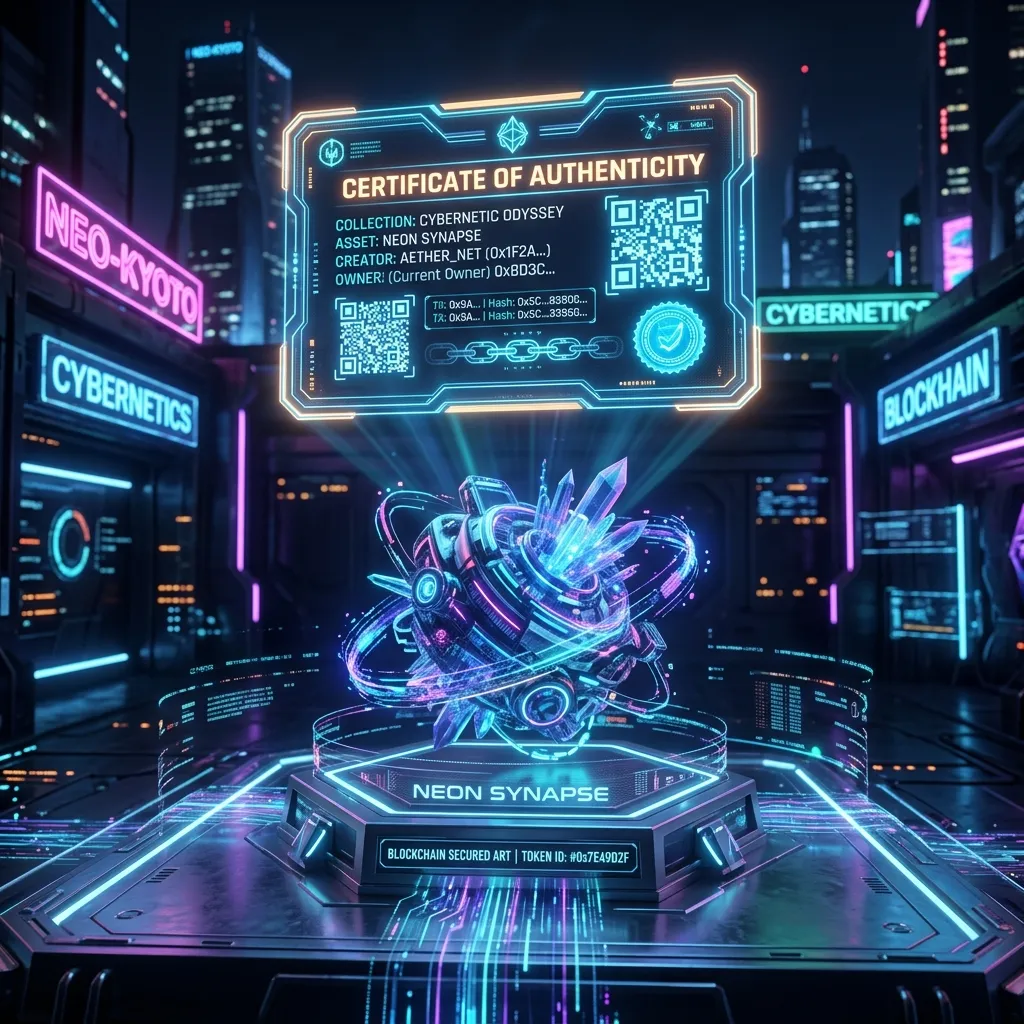
🎯 Introduction: The Concept of Absolute Digital Scarcity
For the first 30 years of the internet, everything was infinitely copiable. If you emailed a photo, an MP3, or a Word document, you were not sending the original; you were sending a perfect duplicate. While great for sharing information, this flaw made it impossible to own anything purely digital.
Bitcoin solved the “double-spend” problem for money, creating digital scarcity. NFTs (Non-Fungible Tokens) brought that same mathematical scarcity to absolutely everything else.
While the early 2020s saw NFTs dominate headlines as expensive digital monkey JPEGs, the technology in 2026 has matured into the backbone of digital property rights, gaming, and real-world asset tokenization on Ethereum.
Section 1: What is an NFT?
Definition
Non-Fungible Token (NFT)
An NFT is a unique cryptographic token that exists on a blockchain (primarily Ethereum) and cannot be replicated. It functions as a verifiable, public certificate of authenticity or proof of ownership for a specific physical or digital asset.
Just like a Smart Contract automates an agreement, an NFT automates the verification of provenance. You do not need an art appraiser or a lawyer to prove you own an NFT; the blockchain verifies it instantly.
Section 2: Fungible vs. Non-Fungible
To understand the technology, you must understand the word “Fungible.”
Fungible = Interchangeable. If I lend you a $10 bill, I don’t care if you pay me back with a different $10 bill. They hold the exact same value. One Bitcoin is equal to one Bitcoin. One Ethereum (ETH) is equal to one Ethereum. These are fungible assets.
Non-Fungible = Unique. A house, an original painting, or a first-edition trading card are non-fungible. You cannot swap my house for your house and assume they hold the exact same value. They have unique properties, histories, and locations.
NFTs bring this concept of unique, non-interchangeable assets to the digital realm.
Section 3: How Do NFTs Actually Work?
The vast majority of NFTs are built on Ethereum using a smart contract standard called ERC-721 (or its upgraded sibling, ERC-1155).
1. The Smart Contract
A developer writes an ERC-721 smart contract that outlines the 'collection' (e.g., 10,000 unique tickets).
2. Minting
A user interacts with the contract, paying a [Gas Fee](/en/blog/ethereum-gas-fees/) to 'mint' (create) an NFT. The NFT is permanently assigned a unique Token ID (e.g., Token #402).
3. Metadata Linking
The smart contract points that Token ID to a metadata file (usually hosted on a decentralized network like IPFS). This metadata contains the image, video, or data properties.
4. Wallet Custody
The blockchain permanently records that Token #402 belongs to your specific [Ethereum Wallet](/en/blog/best-ethereum-wallets/). You can now sell it on a [DApp](/en/blog/what-are-dapps/) marketplace.
Section 4: The Reality of Digital Ownership (“Right-Click Save”)
The most common critique of NFTs is: “I can just right-click and save the image. Why pay for it?”
This misunderstands what an NFT is. When you buy an NFT, you are not buying the copyright to the image (unless specified), nor are you preventing others from looking at it. You are buying the receipt of ownership on the blockchain.
Anyone can print a poster of the Mona Lisa and hang it in their bedroom. But there is only one original in the Louvre, and its provenance makes it valuable. In the digital world, the blockchain is the ultimate, un-fakeable ledger of provenance.
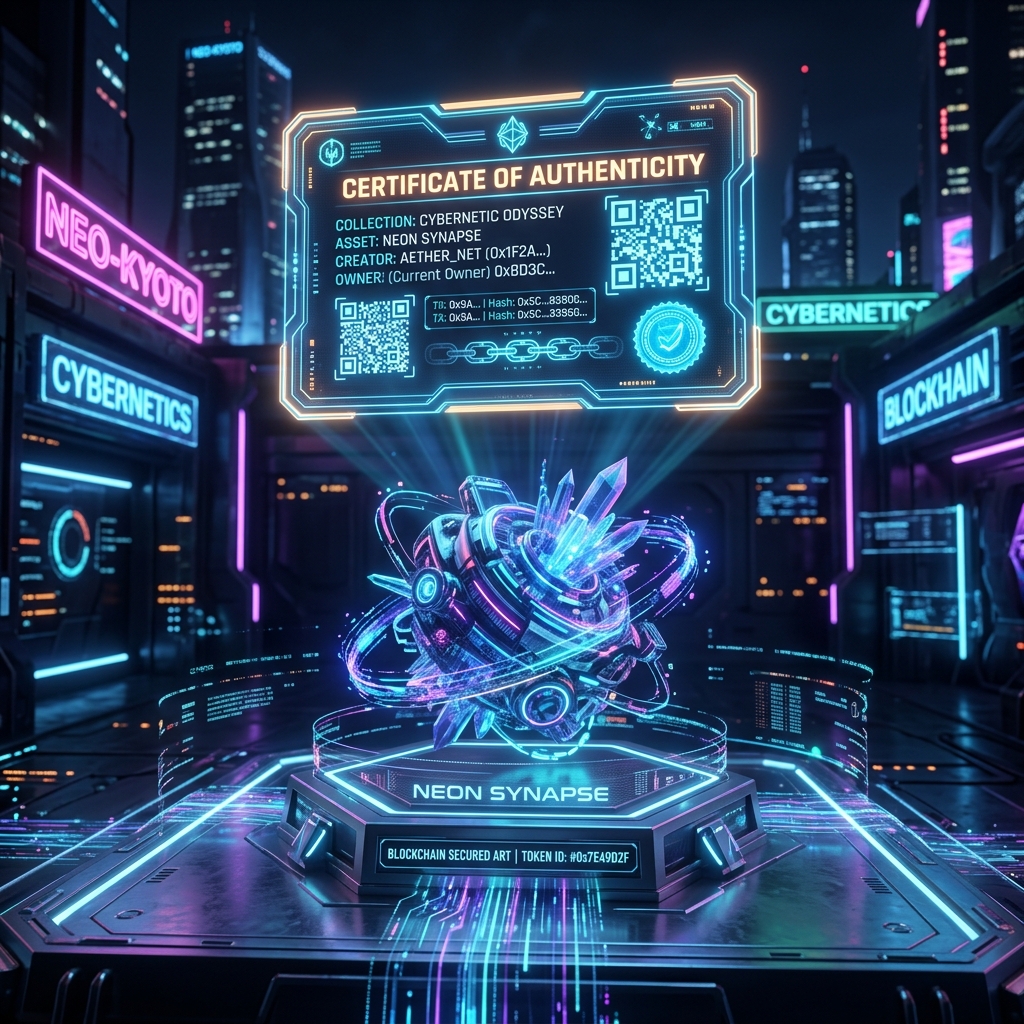
- Prompt: “A gallery with thousands of identical digital images of a glowing artifact. Only one image is connected by a brilliant, unbreakable chain of light down to an Ethereum block, indicating the true, verified original.”
Section 5: Real Utility — NFTs in 2026
While digital art popularized the technology, the applications for unique digital tokens have expanded dramatically:
- Gaming (Play-to-Own): Instead of buying a sword in World of Warcraft that you can never sell or move, Web3 games issue in-game items as NFTs. You own the sword, and you can sell it on an open market for real money.
- Event Ticketing: Ticketmaster fraud is eliminated. NFT tickets are un-fakeable and can be programmed with smart contracts to ensure the original artist gets a 10% royalty every time the ticket is resold on the secondary market.
- Real Estate & RWA: As discussed in our Ethereum Use Cases guide, physical deeds to houses are being minted as NFTs, allowing homes to be sold and settled globally in minutes instead of months.
- Domain Names: Services like Ethereum Name Service (ENS) issue web domains (like
.eth) as NFTs.
Section 6: FAQ — Understanding Digital Ownership
1. Why would someone buy a digital image they can just screenshot?
Screenshotting an NFT is like taking a photo of the Mona Lisa. You have a copy of the pixels, but you do not own the Asset. Ownership of an NFT provides proof of provenance, rights to utility (like airdrops or event access), and the ability to sell the asset on a global market.
2. What does ERC-721 mean?
ERC-721 is the official technical standard for Non-Fungible Tokens on Ethereum. It defines the minimum interface that a smart contract must implement to allow unique tokens to be managed, owned, and traded.
3. Are NFTs bad for the environment?
Not anymore. Following “The Merge” in 2022, Ethereum’s energy consumption dropped by 99.9%. Today, minting an NFT on Ethereum uses roughly the same amount of electricity as sending a single email or posting a tweet.
4. How do I sell an NFT?
You can list your NFT on a secondary marketplace like OpenSea or Blur. You simply connect your wallet, set a price, and sign a transaction. The marketplace only takes a fee once the sale is finalized.
5. What is “Minting”?
Minting is the act of bringing a digital item into existence on the blockchain. When you mint an NFT, you are executing a smart contract that creates a new unique token ID and assigns it to your wallet address.
💡 Key Takeaways
- NFTs introduce digital scarcity to the internet, allowing true ownership of digital files.
- They are built on smart contracts, most commonly using the Ethereum ERC-721 standard.
- While anyone can copy an image, they cannot copy the cryptographic proof of ownership.
- NFT utility has expanded far beyond art into gaming, real estate, and digital identity.
Ready to dive deeper? To buy or trade NFTs, you need a secure place to store them. Read our guide on the Best Ethereum Wallets. If you’re curious how these assets are traded without centralized middlemen, explore our introduction to DeFi on Ethereum.